JellyFil Official Website › Articles › The thyroid question
The thyroid questionAshwagandha And The Thyroid Question On This Label
Ashwagandha is the sixth name inside the JellyFil blend. The randomised trial behind its best-known safety-and-efficacy result used 600 mg a day of a standardised root extract, on its own.
Separately, a small but real case-report literature links ashwagandha to thyrotoxicosis, an excess of thyroid hormone, and one placebo-controlled trial recorded measurable thyroid-hormone movement in the ashwagandha group over eight weeks. Neither finding means ashwagandha is dangerous. Both are worth reading before assuming a gummy blend and a clinical trial are testing the same thing.
Where ashwagandha sits on this panel
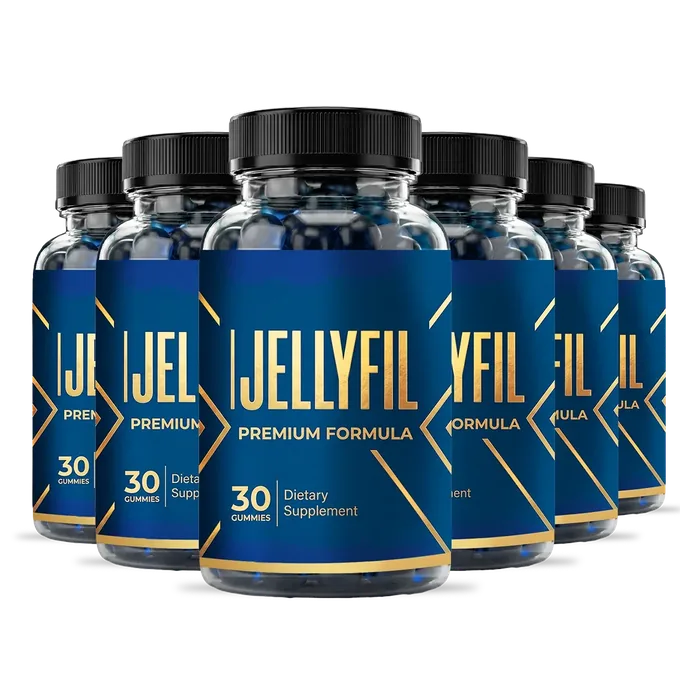
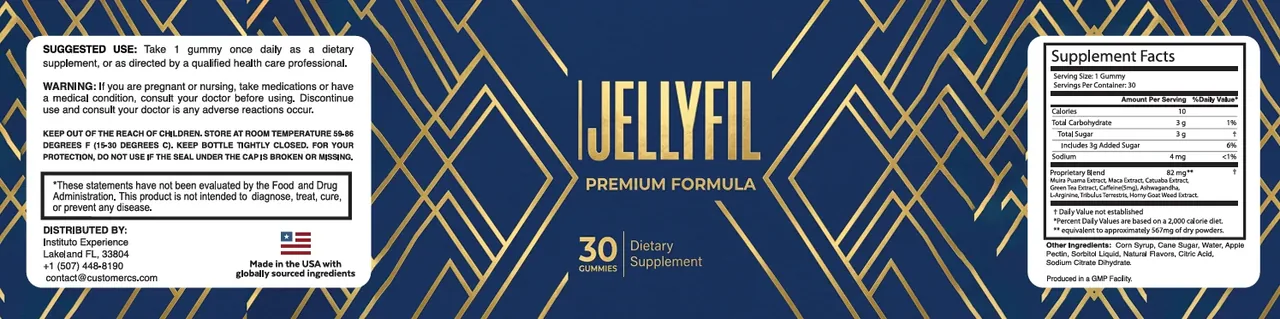
The JellyFil Supplement Facts panel lists ashwagandha as the sixth of nine names inside the 82 mg Proprietary Blend, after muira puama, maca, catuaba, green tea extract and caffeine, and ahead of L-arginine, tribulus terrestris and horny goat weed. By the labeling convention that produces that order, a name in the middle of a nine-item list carries a share smaller than the names ahead of it, inside a total that is already well under a tenth of a gram for all nine combined.
Ashwagandha (Withania somnifera) is one of the more heavily studied adaptogenic herbs on the market, sold as everyday root powder, standardized root extract, or leaf-and-root full-spectrum extract, and the three forms are not interchangeable in dose or in the clinical literature behind them. This article looks at what the trial evidence and the case-report evidence actually say, in the doses and forms they used, set beside what a blend label can and cannot tell a reader.
Most of the ashwagandha trials published in the last decade use one of a handful of named, proprietary, standardised extracts, each carrying its own withanolide percentage and its own manufacturer. A printed panel that simply says "Ashwagandha," with no extract name and no percentage, is not unusual for this category, and it is also the reason a reader cannot look up which specific trial, if any, matches what is actually in the bottle.
JellyFil is a dietary supplement and not a treatment for anything. Nothing here is medical advice. Anyone with a thyroid condition, anyone on thyroid medication, and anyone pregnant or nursing should raise any ashwagandha-containing product with a doctor before the first dose, not after a symptom appears.
The dose behind ashwagandha's best-known trial
Chandrasekhar and colleagues, 2012, ran a prospective, randomized, double-blind, placebo-controlled trial in 64 adults with a history of chronic stress, giving the treatment group one 300 mg capsule of a high-concentration full-spectrum ashwagandha root extract twice a day, 600 mg total, for 60 days. Serum cortisol fell significantly more in the ashwagandha group than in the placebo group, and stress-assessment scores improved significantly on every scale used. The paper reports the adverse effects as mild and comparable between groups, with no serious adverse events.
| Source | Ashwagandha amount | Form |
|---|---|---|
| Chandrasekhar et al. 2012 trial | 600 mg/day (300 mg twice daily) | High-concentration full-spectrum root extract, on its own |
| This JellyFil gummy | Ashwagandha is one of nine names sharing an 82 mg total blend | Not stated on the printed panel |
The panel does not state which ashwagandha extract, or its withanolide percentage, which matters because standardised extracts and raw root powder are not dosed the same way.
That 600 mg figure is the amount used in the single-ingredient trial most often cited for ashwagandha's stress-related reputation. As with maca elsewhere on this website, an 82 mg total blend, split nine ways, is not the same experiment as 600 mg of one standardised extract taken alone.
The case reports: ashwagandha and thyrotoxicosis
Separate from the dose question, a small case-report literature associates ashwagandha use with thyrotoxicosis, a state of excess circulating thyroid hormone. Kamal and colleagues, 2022, reported a 73-year-old woman who developed supraventricular tachycardia and biochemical hyperthyroidism after two years of self-administered ashwagandha root extract taken for hypothyroidism; her symptoms and blood tests resolved after she stopped taking it. Hayashi and colleagues, 2024, reported a case of painless thyroiditis attributed to ashwagandha use in a similar pattern.
Case reports describe individual patients rather than controlled comparisons, and neither paper proves ashwagandha caused the thyroid change rather than coinciding with it. Both authors describe the association as rare and, in the 2022 paper's own words, one that "scant attention has been paid to" in the literature. That is a fair description: this is a small, recent, case-report-level signal, not an established, quantified risk.
What a placebo-controlled trial found in thyroid blood tests
Gannon and colleagues, 2014, measured thyroid-stimulating hormone, free T4 and T3 as a safety check in a placebo-controlled trial of ashwagandha for cognitive function in people with bipolar disorder, specifically because of an earlier case report and because mice given ashwagandha had shown thyroxine increases. Over eight weeks, all three ashwagandha-treated patients with usable data showed a rise in T4 from baseline (7%, 12% and 24%), while six of seven placebo patients showed a T4 decrease. The paper is explicit about its own limits: only ten of sixty original patients had any abnormal thyroid reading, the ashwagandha and placebo groups were unevenly sized for this particular comparison, and thyroid testing was a safety measure rather than the study's primary goal.
Even with those limits stated plainly by the authors, the paper's own conclusion is direct: the subtle laboratory changes "suggest that ASW may increase thyroxine levels, and therefore vigilance regarding hyperthyroidism may be warranted." The same paper also raises the flip side, that this thyroxine-raising property could be useful for people with subclinical hypothyroidism, which is why the honest reading of the ashwagandha-thyroid relationship runs in both directions rather than one.
What this evidence does not show
It does not show that ashwagandha routinely causes thyroid problems. The case reports are individually rare, the RCT's thyroid findings were a secondary safety measure in a small sample, and the great majority of ashwagandha trials, including the 2012 stress-and-cortisol trial above, report no thyroid problems at all. Millions of doses of ashwagandha are taken worldwide without incident.
It does not show what dose, if any, raises thyroid risk, because none of the papers above were designed to answer that question. And it says nothing about the amount of ashwagandha in this specific JellyFil gummy, which the panel does not disclose beyond the 82 mg ceiling shared with eight other names.
It is also worth separating the two thyroid directions the evidence points in. The case reports describe thyrotoxicosis, too much hormone. The 2014 RCT's own framing raises the opposite possibility as well, that ashwagandha's thyroxine-raising tendency could help people who run low, with subclinical hypothyroidism. A single herb moving a hormone level in one direction can be a risk for one person and a non-issue, or even a modest benefit, for another, depending on where their own thyroid sits before they start. That is precisely why a blanket verdict, "safe" or "unsafe," fits this evidence worse than a question aimed at your own starting point.
Who should raise this with a doctor before starting
- Anyone already diagnosed with hyperthyroidism, Graves' disease, or a history of thyrotoxicosis.
- Anyone on thyroid hormone replacement (such as levothyroxine) or on anti-thyroid medication, where an unplanned shift in thyroid hormone levels changes the dose that is right for them.
- Anyone with a new or unexplained racing heartbeat, tremor, heat intolerance or unexplained weight loss, whether or not they connect it to a supplement, since those are the symptoms the case reports above describe.
- Anyone pregnant or nursing, for whom ashwagandha is not established as safe and is generally advised against.
What a cautious approach looks like in practice
None of the four papers above argue for avoiding ashwagandha altogether, and the trial evidence for stress and cortisol is genuinely one of the stronger results in this entire product category. The practical version of caution is narrower than avoidance:
- If you already know your baseline thyroid status, from a recent blood test, that is useful information to have before starting rather than after a symptom appears.
- Watch for a racing heartbeat, unexplained sweating, tremor or unintentional weight loss in the weeks after starting, and stop and ask a clinician if any of them show up, rather than assuming a coincidence.
- If you are already on thyroid medication, do not treat a gummy as separate from that conversation just because it is sold as a vitality product rather than a thyroid product. The case reports above involved exactly that kind of product.
- None of this requires a different decision about JellyFil specifically. It requires the same one-conversation habit that applies to every ashwagandha-containing product on the market.
Order JellyFil with the full blend list in view
Nine names, 82 mg total, and 60 days from purchase to decide.
Two bottles $158 · six bottles $294 · 60-day money-back guarantee
Order JellyFil From This ShopLot JEL-26/JE-2310 · one a day, 30 to a bottle · ships from the United States
What "ashwagandha" on a blend label does not tell you
A blend line that simply reads "Ashwagandha" is naming a plant, not a product. Ashwagandha extracts on the market range from unstandardised root powder to extracts standardised to a specific withanolide percentage, and clinical trials, including the 600 mg trial above, are almost always run on one specific, named, standardised extract rather than on ashwagandha in general. A label that does not name the extract or its standardisation is not unusual for this product category, and it is also not enough information to know whether a given trial's findings, positive or cautionary, transfer to what is actually in the bottle.
That cuts in both directions. It means the case reports above, which typically do not specify a standardised extract either, cannot be assumed to describe the same material as what sits in a gummy. It also means the 600 mg stress-and-cortisol result cannot be assumed to describe this gummy's ashwagandha share, which is a fraction of an 82 mg total split nine ways.
This is not a flaw unique to JellyFil. It is the structural cost of the proprietary-blend format itself, repeated for every herb inside it: a reader can verify that a named plant is present and can read what published trials of that plant, at stated doses and named extracts, have found. What a blend line will not do is connect those two facts, because the connecting number, milligrams of this exact extract in this exact gummy, is the one figure the format is built to withhold.
The wider point about a herb with two kinds of evidence
Ashwagandha carries both a genuinely encouraging clinical trial record for stress and a genuine, if uncommon, thyroid caution in the case-report literature, and reading only one side of that record gives a false picture either way. The honest way to hold both facts at once is: this is a well-studied herb with real reported benefits at doses around 600 mg of a standardised extract, and a small, real signal that it can move thyroid hormone levels in some people, which matters most for people who already have a thyroid condition or take thyroid medication.
What a proprietary blend label cannot do is tell a reader which of those two facts is more relevant to the bottle in front of them, because it does not disclose the extract type or the milligram amount. That is the specific gap this article is written to name, not to resolve, because only the manufacturer holds the number that would resolve it.
The takeaway is not to be afraid of a plant with this much evidence behind it in both directions. It is to treat "Ashwagandha" on a nine-name blend line the way this article has: as the name of a real, studied herb, attached to a real body of clinical trial evidence and a real, smaller body of case-report caution, neither of which the label's own wording gives you the dose to apply with confidence to this exact bottle.
The evidence question for the name that leads this blend is covered in this website's article on muira puama and catuaba. And for a different kind of medication conversation on this same panel, the eighth name is covered in the article on horny goat weed and blood pressure medicine.
- Chandrasekhar K, Kapoor J, Anishetty S. A prospective, randomized double-blind, placebo-controlled study of safety and efficacy of a high-concentration full-spectrum extract of ashwagandha root in reducing stress and anxiety in adults. Indian J Psychol Med. 2012;34(3):255-262. PMID 23439798. https://pubmed.ncbi.nlm.nih.gov/23439798/
- Kamal HI, Patel K, Brdak A, Heffernan J, Ahmad N. Ashwagandha as a Unique Cause of Thyrotoxicosis Presenting With Supraventricular Tachycardia. Cureus. 2022;14(3):e23494. PMID 35475098. https://pubmed.ncbi.nlm.nih.gov/35475098/
- Hayashi M, Hamada H, Azuma SI, Hayashi K. Painless Thyroiditis by Withania somnifera (Ashwagandha). Cureus. 2024;16(3):e55352. PMID 38559552. https://pubmed.ncbi.nlm.nih.gov/38559552/
- Gannon JM, Forrest PE, Roy Chengappa KN. Subtle changes in thyroid indices during a placebo-controlled study of an extract of Withania somnifera in persons with bipolar disorder. J Ayurveda Integr Med. 2014;5(4):241-245. PMID 25624699. https://pubmed.ncbi.nlm.nih.gov/25624699/