JellyFil Official Website › JellyFil Ingredients
JellyFil IngredientsJellyFil Ingredients: All Nine Extracts On The Printed Panel
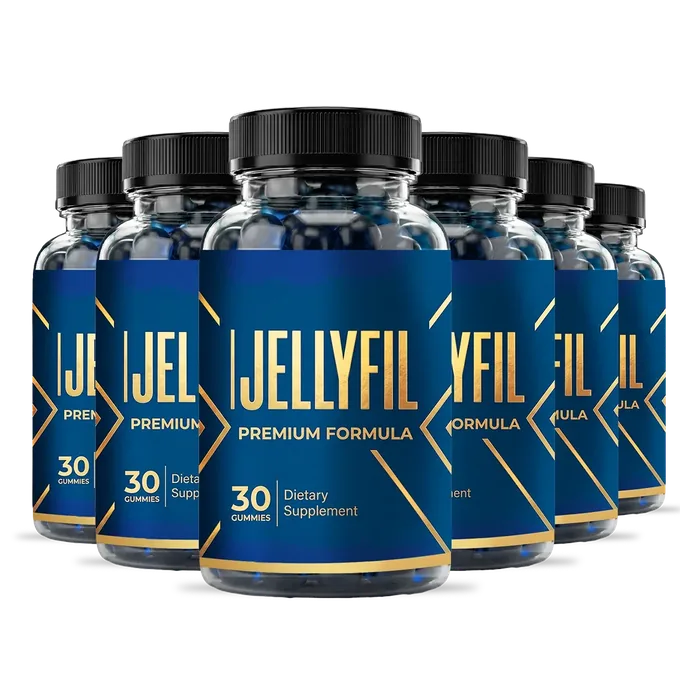
The bottle prints nine extracts inside one Proprietary Blend of 82 mg.
In panel order: Muira Puama, Maca, Catuaba, Green Tea, Caffeine, Ashwagandha, L-Arginine, Tribulus Terrestris, Horny Goat Weed. The seller’s advertising names 6 of them. Only caffeine, at 5 mg, carries an amount of its own, so every other figure here is the blend ceiling rather than a dose.
Each extract below is set beside the amount the published studies actually used, with a link to the record. That comparison is the whole point of this page and it is not a flattering one in several places.
The two JellyFil ingredient lists, side by side
| Extract | On the printed panel | In the advertising |
|---|---|---|
| Muira Puama Extract | Yes | Yes |
| Maca Extract | Yes | Yes |
| Catuaba Extract | Yes | Yes |
| Green Tea Extract | Yes | No |
| Caffeine | Yes | No |
| Ashwagandha | Yes | Yes |
| L-Arginine | Yes | Yes |
| Tribulus Terrestris | Yes | Yes |
| Horny Goat Weed Extract | Yes | No |
The panel order is the order the label prints, which normally runs from the largest share by weight downwards.
Where the two disagree, the printed panel wins. It is the regulated statement on the container that arrives, it is the only one of the two carrying an amount, and one of the three extracts it adds is the only ingredient on this bottle with a medication conversation attached to it.
That gap is worth a sentence rather than a shrug: green tea extract and 5 mg of caffeine are ordinary omissions, and horny goat weed is not. Its marker compound acts at the same target as prescription erectile-dysfunction tablets, which is exactly the fact a buyer taking a nitrate needs before the first gummy.
Every JellyFil extract, with the amounts the studies used
Nine cards, in the order the panel prints them. The amounts quoted are what the published work used, not what is in this gummy.
Muira Puama Extract
Ptychopetalum olacoidesinside the 82 mg blendFirst on the panel, and the least studied in people. Muira puama is an Amazonian shrub whose root and bark have been sold as a tonic for well over a century, and it is printed first on this blend, which normally signals the largest share by weight. The published record behind it is almost entirely animal work: a memory experiment in mice found aged mice retrieving a learned task better after oral doses, and a 2003 enzyme study of the root identified activity against the enzyme that clears acetylcholine. Both are laboratory findings in rodents. No randomised human trial of muira puama at any amount appears in the PubMed record, so the honest position is that the first name on this label is the one with the least human evidence behind it.
Sources: a memory experiment in mice · a 2003 enzyme study of the root
Maca Extract
Lepidium meyeniiinside the 82 mg blendThe one member with repeated randomised trials. Maca is a Peruvian root vegetable, and it is the only botanical here with more than one randomised trial to its name. In the 2002 randomised maca trial, twelve weeks of 1,500 mg or 3,000 mg a day raised self-reported sexual desire in healthy men while leaving serum testosterone unchanged, which is a useful pair of results to hold together. A later a systematic review of maca trials of the trial record called the evidence suggestive rather than settled and asked for larger studies. A separate a dose-finding trial of maca root trial used 1.5 g and 3 g a day. Every one of those amounts is measured in grams; the whole blend here is 82 mg.
Sources: the 2002 randomised maca trial · a systematic review of maca trials · a dose-finding trial of maca root · MedlinePlus on maca
Catuaba Extract
a trade name, not one speciesinside the 82 mg blendThe name covers more than one plant. Catuaba is the most interesting name on this panel for a reason that has nothing to do with what it does. When Austrian pharmacognosists ran an analysis of commercial catuaba through morphological and chemical analysis, they found that material sold under the name came from different botanical sources with different constituents, so two bottles labelled catuaba need not contain the same plant. The label here prints Catuaba Extract and no species, which is normal for the trade and is worth knowing before comparing this panel with any other.
Sources: an analysis of commercial catuaba
Green Tea Extract
Camellia sinensisinside the 82 mg blendA well-studied catechin extract. Green tea extract is printed fourth on the panel and appears nowhere in the seller's six-name graphic. It is a real omission rather than a trivial one: the catechin fraction of green tea is among the better-studied plant extracts in circulation, with a meta-analysis of green tea and blood pressure pooling randomised trials at a median near 400 mg of catechins a day, and the the US Pharmacopeia review of green tea extract review of case reports is the reason several regulators now ask for a warning on concentrated extracts. At the share of 82 mg that nine names can leave it, the amount here sits far below both the studied and the cautioned range.
Absent from the seller’s own ingredient graphic, which is headed with six names. This one is printed on the panel of the bottle that arrives.
Sources: a meta-analysis of green tea and blood pressure · the US Pharmacopeia review of green tea extract · NCCIH on green tea
Caffeine
printed as Caffeine(5mg)5 mgThe only member of the blend with its own figure. Caffeine sits inside the blend with a number beside it, which makes it the one ingredient on this bottle a buyer can compare with anything else. Five milligrams is very small: a cup of brewed coffee runs 80 mg to 100 mg, and the the FDA consumer update on caffeine sets 400 mg a day as the figure most healthy adults tolerate. An an umbrella review of caffeine research of the research found most outcomes neutral or favourable in that range, while a meta-analysis in adults with high blood pressure reported measurable blood-pressure effects in people already treated for hypertension. Five milligrams a day is unlikely to be felt by anyone, and it still belongs on a label a buyer reads before bed.
Absent from the seller’s own ingredient graphic, which is headed with six names. This one is printed on the panel of the bottle that arrives.
Sources: the FDA consumer update on caffeine · an umbrella review of caffeine research · a meta-analysis in adults with high blood pressure
Ashwagandha
Withania somniferainside the 82 mg blendStrong trial record, at amounts this blend cannot reach. Ashwagandha has the largest randomised literature of anything on this panel. A a meta-analysis of stress and anxiety trials meta-analysis of trials using 240 mg to 600 mg a day of root extract found measurable reductions in stress and anxiety scores; a 2026 a 2026 meta-analysis of hormone outcomes meta-analysis looked specifically at hormonal outcomes; and a meta-analysis in male fertility pooled the male-fertility trials, several of which used 5 g a day of root powder. It also carries the clearest safety signal here: a case series from two national registries describes reported liver injury from two national registries, which is why the NCCIH on ashwagandha page on it exists.
Sources: a meta-analysis of stress and anxiety trials · a 2026 meta-analysis of hormone outcomes · a meta-analysis in male fertility · a case series from two national registries · NCCIH on ashwagandha
L-Arginine
an amino acidinside the 82 mg blendThe one amino acid on the panel. Arginine is the amino acid the body uses to make nitric oxide, which relaxes the smooth muscle in blood-vessel walls. That is a real and well-mapped pathway, and it is also where the arithmetic on this label is at its starkest. a pharmacokinetic comparison of the two amino acids gave healthy adults single oral doses of 3 g and 6 g and tracked what reached the bloodstream; the a review of oral arginine and blood pressure review of blood-pressure work discusses amounts in the same range. Those are grams. Nine names share 82 milligrams here, so arginine's share is a fraction of a percent of what the trials measured.
Sources: a pharmacokinetic comparison of the two amino acids · a review of oral arginine and blood pressure
Tribulus Terrestris
a spiny vineinside the 82 mg blendThe one the trial record has answered. Tribulus is sold across this whole category on the strength of a hormonal story, and it is the member of this panel where the published answer is least ambiguous. A 2026 a 2026 meta-analysis of tribulus trials meta-analysis of randomised trials, at roughly 750 mg to 1,500 mg a day, found the effect on erectile-function scores small and inconsistent and no reliable change in testosterone. The broader an evidence review of this whole product category review of this product category reached the same conclusion about it. It is on the bottle, it is named in the advertising, and it is the one to expect least from.
Sources: a 2026 meta-analysis of tribulus trials · an evidence review of this whole product category
Horny Goat Weed Extract
Epimedium speciesinside the 82 mg blendThe omission with the most to say about safety. Horny goat weed is the ninth name on the panel and the third the advertising leaves out, and of the three it is the one a buyer most needs to see. Its marker compound, icariin, is a weak inhibitor of the same enzyme that prescription erectile-dysfunction tablets block: the 2010 laboratory study of icariin demonstrated the effect in cell culture and in rats, and a review of plant PDE-5 inhibitors places it among the plant constituents with measurable activity at that target. That shared mechanism is exactly why MedlinePlus on epimedium lists interactions with nitrates and with blood-pressure medicines, and it is the sentence that should have been in the advertising.
Absent from the seller’s own ingredient graphic, which is headed with six names. This one is printed on the panel of the bottle that arrives.
Sources: the 2010 laboratory study of icariin · a review of plant PDE-5 inhibitors · MedlinePlus on epimedium
What JellyFil can carry against what the research used
Nine extracts share 82 mg. Caffeine takes 5 mg of that by name, leaving 77 mg for the other eight, so the average share is under ten milligrams and no single extract can exceed 82 mg however the mix is weighted. The panel adds that the 82 mg is equivalent to approximately 567 mg of dry powders, which is a real multiplier and still leaves the gap above in place for maca, ashwagandha and arginine.
The rest of what is in a JellyFil gummy
Other ingredients: Corn Syrup, Cane Sugar, Water, Apple Pectin, Sorbitol Liquid, Natural Flavors, Citric Acid, Sodium Citrate Dihydrate.
Corn syrup, cane sugar and water are the body of the gummy; apple pectin is the setting agent, which is why the vegetarian seal shown on this website is consistent with the ingredient list; sorbitol liquid keeps it soft; citric acid and sodium citrate dihydrate handle the tartness and the pH. Together they account for the 10 calories, the 3 g of carbohydrate and the 4 mg of sodium on the panel.
That matrix is most of the weight of the gummy, and it is the structural reason a chewable in this category runs a smaller active line than a capsule does. The Supplement Facts page carries the whole panel line by line.
Who publishes this JellyFil website?
Only the sources this page links to. Each one opens to a public record, and the amount every study used is printed beside its extract above.
- da Silva AL, Piato AL, Bardini S, et al. Memory retrieval improvement by Ptychopetalum olacoides in young and aging mice. J Ethnopharmacol. 2004;95(2-3):199-203. PMID 15507336. https://pubmed.ncbi.nlm.nih.gov/15507336/
- Siqueira IR, Fochesatto C, da Silva AL, et al. Ptychopetalum olacoides, a traditional Amazonian “nerve tonic”, possesses anticholinesterase activity. Pharmacol Biochem Behav. 2003;75(3):645-50. PMID 12895682. https://pubmed.ncbi.nlm.nih.gov/12895682/
- Kletter C, Glasl S, Presser A, et al. Morphological, chemical and functional analysis of catuaba preparations. Planta Med. 2004;70(10):993-1000. PMID 15490329. https://pubmed.ncbi.nlm.nih.gov/15490329/
- Gonzales GF, Córdova A, Vega K, et al. Effect of Lepidium meyenii (MACA) on sexual desire and its absent relationship with serum testosterone levels in adult healthy men. Andrologia. 2002;34(6):367-72. PMID 12472620. https://pubmed.ncbi.nlm.nih.gov/12472620/
- Shin BC, Lee MS, Yang EJ, et al. Maca (L. meyenii) for improving sexual function: a systematic review. BMC Complement Altern Med. 2010;10:44. PMID 20691074. https://pubmed.ncbi.nlm.nih.gov/20691074/
- Dording CM, Fisher L, Papakostas G, et al. A double-blind, randomized, pilot dose-finding study of maca root (L. meyenii) for the management of SSRI-induced sexual dysfunction. CNS Neurosci Ther. 2008;14(3):182-91. PMID 18801111. https://pubmed.ncbi.nlm.nih.gov/18801111/
- MedlinePlus, U.S. National Library of Medicine. Maca. https://medlineplus.gov/druginfo/natural/555.html
- Fornalik M, Malkiewicz A, Adamczak D, et al. Hormonal Modulation with Withania somnifera: Systematic Review and Meta-Analysis of Randomized-controlled Trials. Planta Med. 2026;92(8):790-805. PMID 41740946. https://pubmed.ncbi.nlm.nih.gov/41740946/
- Akhgarjand C, Asoudeh F, Bagheri A, et al. Does Ashwagandha supplementation have a beneficial effect on the management of anxiety and stress? A systematic review and meta-analysis of randomized controlled trials. Phytother Res. 2022;36(11):4115-4124. PMID 36017529. https://pubmed.ncbi.nlm.nih.gov/36017529/
- Durg S, Shivaram SB, Bavage S. Withania somnifera (Indian ginseng) in male infertility: An evidence-based systematic review and meta-analysis. Phytomedicine. 2018;50:247-256. PMID 30466985. https://pubmed.ncbi.nlm.nih.gov/30466985/
- Björnsson HK, Björnsson ES, Avula B, et al. Ashwagandha-induced liver injury: A case series from Iceland and the US Drug-Induced Liver Injury Network. Liver Int. 2020;40(4):825-829. PMID 31991029. https://pubmed.ncbi.nlm.nih.gov/31991029/
- National Center for Complementary and Integrative Health. Ashwagandha: what the science says. https://www.nccih.nih.gov/health/ashwagandha
- Schwedhelm E, Maas R, Freese R, et al. Pharmacokinetic and pharmacodynamic properties of oral L-citrulline and L-arginine: impact on nitric oxide metabolism. Br J Clin Pharmacol. 2008;65(1):51-9. PMID 17662090. https://pubmed.ncbi.nlm.nih.gov/17662090/
- Khalaf D, Krüger M, Wehland M, et al. The Effects of Oral l-Arginine and l-Citrulline Supplementation on Blood Pressure. Nutrients. 2019;11(7):1679. PMID 31336573. https://pubmed.ncbi.nlm.nih.gov/31336573/
- Suharyani S, Amanda B, Angellee J, et al. Tribulus terrestris for management of patients with erectile dysfunction: a systematic review and meta-analysis of randomized trials. Int J Impot Res. 2026;38(1):11-18. PMID 40360723. https://pubmed.ncbi.nlm.nih.gov/40360723/
- Khalesi S, Sun J, Buys N, et al. Green tea catechins and blood pressure: a systematic review and meta-analysis of randomised controlled trials. Eur J Nutr. 2014;53(6):1299-311. PMID 24861099. https://pubmed.ncbi.nlm.nih.gov/24861099/
- Oketch-Rabah HA, Roe AL, Rider CV, et al. United States Pharmacopeia (USP) comprehensive review of the hepatotoxicity of green tea extracts. Toxicol Rep. 2020;7:386-402. PMID 32140423. https://pubmed.ncbi.nlm.nih.gov/32140423/
- National Center for Complementary and Integrative Health. Green tea: what the science says. https://www.nccih.nih.gov/health/green-tea
- Grosso G, Godos J, Galvano F, et al. Coffee, Caffeine, and Health Outcomes: An Umbrella Review. Annu Rev Nutr. 2017;37:131-156. PMID 28826374. https://pubmed.ncbi.nlm.nih.gov/28826374/
- Mesas AE, Leon-Muñoz LM, Rodriguez-Artalejo F, et al. The effect of coffee on blood pressure and cardiovascular disease in hypertensive individuals: a systematic review and meta-analysis. Am J Clin Nutr. 2011;94(4):1113-26. PMID 21880846. https://pubmed.ncbi.nlm.nih.gov/21880846/
- U.S. Food and Drug Administration. Spilling the beans: how much caffeine is too much? https://www.fda.gov/consumers/consumer-updates/spilling-beans-how-much-caffeine-too-much
- Shindel AW, Xin ZC, Lin G, et al. Erectogenic and neurotrophic effects of icariin, a purified extract of horny goat weed (Epimedium spp.) in vitro and in vivo. J Sex Med. 2010;7(4 Pt 1):1518-28. PMID 20141584. https://pubmed.ncbi.nlm.nih.gov/20141584/
- Anand Ganapathy A, Hari Priya VM, Kumaran A. Medicinal plants as a potential source of Phosphodiesterase-5 inhibitors: A review. J Ethnopharmacol. 2021;267:113536. PMID 33137431. https://pubmed.ncbi.nlm.nih.gov/33137431/
- MedlinePlus, U.S. National Library of Medicine. Epimedium (horny goat weed). https://medlineplus.gov/druginfo/natural/699.html
- Kuchakulla M, Narasimman M, Soni Y, et al. A systematic review and evidence-based analysis of ingredients in popular male testosterone and erectile dysfunction supplements. Int J Impot Res. 2021;33(3):311-317. PMID 32358510. https://pubmed.ncbi.nlm.nih.gov/32358510/
More about JellyFil
Order JellyFil knowing all nine names
Nine extracts in 82 mg, 5 mg of caffeine, and 60 days from the date of purchase to change your mind.
Two bottles $158 · six bottles $294 · 60-day money-back guarantee
Order JellyFil From This ShopLot JEL-26/JE-2310 · one a day, 30 to a bottle · ships from the United States