JellyFil Official Website › Articles › The liver caution
The liver cautionGreen Tea Extract, Caffeine And The Liver Caution
Green tea extract is the fourth name on this label, and it carries a caution that has nothing to do with caffeine: concentrated green tea extracts have their own entry in the drug-induced liver injury literature.
A 2020 U.S. Pharmacopeia expert-panel review found reported cases of liver injury linked to EGCG intakes from about 140 mg to roughly 1,000 mg a day, taken as a concentrated bolus rather than as brewed tea. This article works out what that threshold means, where a 82 mg total blend plausibly sits against it, and who should read the caution label on any concentrated green tea product before taking one.
Two different cautions, one plant
Green tea extract shows up on vitality and weight-management labels for its catechins, mainly epigallocatechin gallate (EGCG), and it usually arrives on the same panel as a source of caffeine, since the same leaf carries both. Those are two separate safety questions. The caffeine question is about stimulant load and is covered in this website's article on the printed 5 mg figure. This article is about the other one: a liver-safety caution attached specifically to concentrated green tea catechin extracts, independent of caffeine content, that has built up in the toxicology and case-report literature over roughly two decades.
On the JellyFil Supplement Facts panel, green tea extract is the fourth of nine names inside the 82 mg Proprietary Blend, after muira puama, maca and catuaba, and ahead of caffeine, ashwagandha, L-arginine, tribulus terrestris and horny goat weed. It is also one of the three names the seller’s own advertising graphics leave out, alongside caffeine and horny goat weed.
Green tea extract earns a place in this category chiefly for its catechin content, which some smaller trials associate with modest metabolic and cardiovascular effects, rather than for any effect specific to men's vitality. Its presence on a label like this one is usually a supporting ingredient rather than the headline reason a buyer picks the product, which is exactly why its safety profile tends to get less scrutiny than the ingredients the marketing foregrounds.
JellyFil is a dietary supplement and not a treatment for anything. Nothing here is medical advice. Abdominal pain, dark urine, unusual fatigue or yellowing of the skin or eyes are reasons to stop any supplement and see a doctor, not to wait and see.
What the U.S. Pharmacopeia's expert panel found
Oketch-Rabah and colleagues, 2020, published a comprehensive review on behalf of the U.S. Pharmacopeia's Green Tea Extract Hepatotoxicity Expert Panel, drawing on toxicological studies, human intervention trials and the NIH's Drug-Induced Liver Injury Network. It found that green tea extracts (GTE) can carry hepatotoxic residues from processing, but that those residues were not the cause of the liver injury cases the panel reviewed. Instead, the pattern was specific: animal and human data showed that repeated bolus doses of concentrated GTE, taken during fasting, substantially increase how much EGCG the body absorbs, likely by overwhelming the gut's normal first-pass processing of it, and the resulting injury pattern in toxicology studies matched a hepatocellular pattern, meaning liver-cell damage rather than a bile-duct problem.
Based on that evidence, the panel added a cautionary label requirement to USP's own green tea extract monograph, reading in part: do not take on an empty stomach, take with food, do not use if you have a liver problem, and stop and consult a doctor for symptoms such as abdominal pain, dark urine or jaundice.
The EGCG threshold, and why bolus dosing matters
The USP panel's own review reports published adverse-event case reports associating hepatotoxicity with EGCG intakes ranging from roughly 140 mg to about 1,000 mg a day, with what the panel calls substantial variation between individuals, possibly for genetic reasons. A separate, independent systematic review reaches a similar picture from a different angle.
| Source | Finding |
|---|---|
| Oketch-Rabah et al. 2020 (USP panel) | Case reports of liver injury associated with EGCG intakes of about 140 mg to ~1,000 mg/day, mainly with bolus dosing on an empty stomach |
| Hu et al. 2018 (systematic review of 159 human intervention studies) | Derived a safe intake level of 338 mg EGCG/day for concentrated, solid-dose green tea preparations; liver effects were dose-dependent and tied to large bolus doses, not to brewed tea or beverage-form extracts |
Both reviews agree on the mechanism: concentrated catechin extracts taken as a capsule or tablet, especially on an empty stomach, behave differently in the body than the same catechins consumed as brewed tea or diluted in a beverage.
Hu and colleagues, 2018, reviewed toxicology studies and adverse-event data from 159 human intervention trials and confirmed the liver as the target organ for concentrated catechin exposure, with risk rising with total catechin and EGCG content and with bolus, fasted dosing specifically. From that data the authors derived a safe intake level of 338 mg of EGCG a day for solid, bolus-dosed preparations like capsules and gummies, distinct from a higher observed safe level for beverage-form tea preparations, where the same catechin load is absorbed more gradually.
Where an 82 mg total blend plausibly sits against that threshold
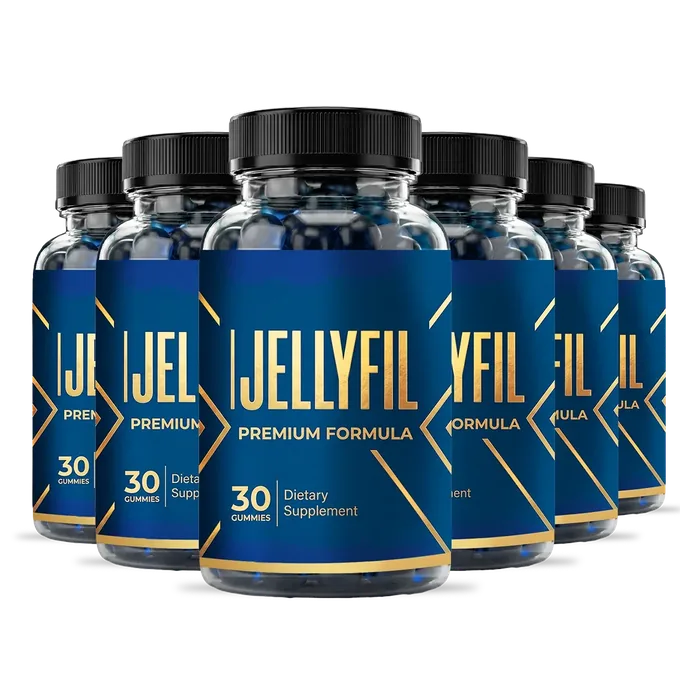
Set the numbers beside each other the same way this website does for every ingredient on this panel. The lower bound the USP panel cites for reported liver-injury cases is around 140 mg of EGCG a day. Hu and colleagues put a conservative safe ceiling at 338 mg of EGCG a day for bolus-dosed products. The entire JellyFil Proprietary Blend, all nine names combined, is 82 mg, and green tea extract is one share of that total rather than the whole of it, sitting behind muira puama, maca and catuaba in the printed order.
Even a generous, almost certainly overstated assumption, that green tea extract were the majority of the 82 mg blend and that its catechin fraction were entirely EGCG, would put this product's EGCG content well under the lower bound the case reports describe. That arithmetic is reassuring on its own terms. It is not a laboratory measurement, because the panel does not disclose the milligram share or the EGCG percentage of the extract used, so a reader is working from a ceiling rather than a certified number.
What this label does not say
The Supplement Facts panel does not state how green tea extract was standardised, what percentage of it is EGCG or total catechins, or how much of the 82 mg blend it actually occupies. None of that is unusual for this product category, and none of it is required by law for a proprietary blend. It does mean the reassuring arithmetic above rests on an assumption, plausible but unverified, that the ingredient order on the label reflects a genuinely small green tea share.
It also means the USP panel's own recommended label language, take with food, do not use with a liver problem, does not appear on this or most gummy-format products carrying green tea extract, because that caution was written for the standalone green tea extract monograph rather than mandated across every product that includes it as one of several ingredients.
There is one structural point worth naming plainly: a gummy is, by definition, not taken on an empty stomach in the strict laboratory sense the USP panel describes, since the gummy itself is a small amount of food. That is not the same as taking a supplement deliberately with a meal, and it is not a substitute for reading the caution if a reader also takes a separate, more concentrated green tea product elsewhere in the day.
Order JellyFil with the full ingredient order in view
Nine names, 82 mg total, and 60 days from purchase to decide.
Two bottles $158 · six bottles $294 · 60-day money-back guarantee
Order JellyFil From This ShopLot JEL-26/JE-2310 · one a day, 30 to a bottle · ships from the United States
Who should be careful with any concentrated green tea extract
- Anyone with an existing liver condition, including hepatitis, fatty liver disease or a history of drug-induced liver injury, should raise any concentrated green tea extract product with a doctor before starting, per the USP panel's own monograph language.
- Anyone taking the gummy on an empty stomach rather than with food is, per the mechanism the USP panel describes, in the dosing pattern most associated with the case reports it reviewed. Taking it with a meal is the simple mitigation the panel itself recommends.
- Anyone combining this product with a separate green tea extract supplement, a fat-burner, or another product containing concentrated catechins should add the EGCG content together rather than assume each product's small share is safe in isolation.
- New abdominal pain, dark urine, unusual fatigue or jaundice after starting any green-tea-extract product is a reason to stop and see a doctor, regardless of how small the labeled dose appears.
- Anyone who drinks green tea regularly as a beverage does not need to subtract that from their concern here. The literature above is specifically about concentrated, solid-dose extracts, not about brewed tea, where the same catechins are absorbed far more gradually and are not linked to the same injury pattern.
And the caffeine line, briefly
Green tea extract is also a source of the second, undeclared caffeine on this panel, separate from the 5 mg printed inside the blend line. That question, how much caffeine green tea extract plausibly adds and why the printed 5 mg is a floor rather than a total, is answered in full in this website's article on the printed caffeine figure, and it is a different question from the liver caution above. A reader can be entirely unconcerned about 5 mg of caffeine and still have a reasonable question about EGCG and the liver, because the two cautions come from different parts of the same leaf and act through different mechanisms.
The wider point about a caution that does not scale with a blend's size
The arithmetic in this article is reassuring for this specific product at its printed 82 mg total. It is not a universal answer for every product that lists green tea extract, because the same math changes completely for a single-ingredient green tea extract capsule, or for a weight-management stack that intentionally concentrates catechins to hundreds of milligrams. The USP panel's caution exists because some products in that second category genuinely do reach the doses the case reports describe.
The habit worth keeping from this article is not "green tea extract is dangerous," which the evidence does not support at ordinary doses, and not "green tea extract is always safe," which the case-report literature also does not support at concentrated bolus doses. It is to ask, for any product carrying it, roughly how concentrated the green tea extract is and how it is meant to be taken, the same way this article has asked for the one bottle this website is written about.
Both papers cited here are, notably, industry-adjacent in parts of their authorship, the USP panel includes members affiliated with supplement manufacturers and the Hu review's authors work for a supplement company, which is disclosed openly in both papers' conflict-of-interest statements and is worth knowing when weighing how each one frames its conclusions. Neither fact changes the underlying case reports both papers cite, which came from independent clinical sources including the NIH's own Drug-Induced Liver Injury Network, but it is the kind of detail this website tries to name rather than leave for a reader to find later.
Green tea extract is one of the three names this website has already flagged as missing from the seller's own advertising graphics, alongside caffeine and horny goat weed; that gap is covered in full in the article on nine names on the bottle against six in the advert.
- Oketch-Rabah HA, Roe AL, Rider CV, et al. United States Pharmacopeia (USP) comprehensive review of the hepatotoxicity of green tea extracts. Toxicol Rep. 2020;7:386-402. PMID 32140423. https://pubmed.ncbi.nlm.nih.gov/32140423/
- Hu J, Webster D, Cao J, Shao A. The safety of green tea and green tea extract consumption in adults - Results of a systematic review. Regul Toxicol Pharmacol. 2018;95:412-433. PMID 29580974. https://pubmed.ncbi.nlm.nih.gov/29580974/